
University of Leipzig

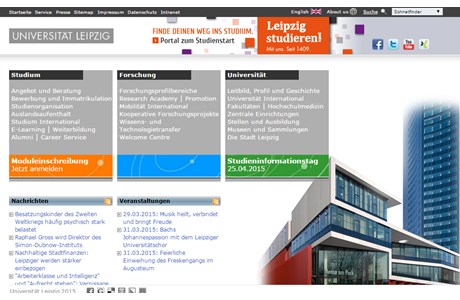
University of Leipzig, located in the vibrant city of Leipzig in Saxony, is one of the world's oldest academic institutions. The university, known by its Latin name Alma Mater Lipsiensis, serves as a fundamental institution for European intellectual development because it has maintained continuous educational operations since its establishment as Germany's second oldest university. The university operates under its motto "A Tradition of Crossing Boundaries" which shows its dedication to conducting research across different fields while working with researchers from around the world. The urban campus of the university extends throughout the central business district because it combines historical land areas with contemporary architectural structures which include the Paulinum that functions as both an assembly hall and a university church.
Frederick I Elector of Saxony and his brother William II established the institution on December 2 1409 after a major academic exodus of German-speaking scholars from the University of Prague. The city developed into a major European cultural center which maintained its existence through multiple historical periods that included both the Reformation and the Thirty Years' War. The university acquired international recognition during the 19th century because it drew famous people like Johann Wolfgang von Goethe and Friedrich Nietzsche and Richard Wagner to its institution. The university faced multiple obstacles during the World Wars and the GDR era when it operated as Karl Marx University from 1953 until 1953. The university changed its name back to its original name after German reunification in 1990 and proceeded to modernize its research facilities through a complete institutional restructure.
University Profile
Get a quick snapshot of the university's key details.
| University Name | University of Leipzig |
|---|---|
| Name in Local Language | Universität Leipzig |
| Year Established | 1409 |
| Motto | Aus Tradition Grenzen überschreiten |
| Motto in English | Crossing boundaries out of tradition |
| Governing Type | Public |
| Student Body | Co-education |
| Highest Degree | Doctorate |
| International Tuition | Low (under US$10k/yr) |
| Languages of Instruction | English, German |
| Campus Type | Urban |
Location
The university is located in Leipzig, Sachsen. Find the address and map of the university below.
| Address | Ritterstrasse 26, Leipzig, Sachsen, Germany |
|---|---|
Contact
Connect with the university easily! Find their contact details.
| Phone | +49 (341) 97 108 |
|---|---|
| Fax | +49 (341) 97 30099 |
| Website |
|
| Contact | Message this university |
| More Links |
Admission Info
Find information below on admission to University of Leipzig.
| Accepts International Students | Yes |
|---|---|
| Student Body | Men and Women |
| Undergraduate Admission Info | Click here |
| Graduate Admission Info | Click here |
Scholarship and Financial Aids
Click on the following links to get information on scholarships and/or financial aids offered by University of Leipzig.
| Scholarship Info | Click here |
|---|
Programs and Courses
Get a quick overview of programs and courses offered at this university.
| Bachelor's Degrees | Master's Degrees | Doctorate Degrees | Diplomas | |
|---|---|---|---|---|
| Arts & Humanities | n/a | |||
| Business & Social Sciences | n/a | |||
| Engineering | n/a | n/a | n/a | n/a |
| Language & Cultural Studies | n/a | |||
| Medicine & Health | n/a | n/a | ||
| Science & Technology | n/a |
Click on the following button to explore a detailed list of programs and courses of this institute.
View Course ListRelated Articles
Stay informed with the following article related to the university or higher education in Germany.
Information on University of Leipzig was last updated more than a month ago.
Our team works hard to provide the most accurate information on the institution. While we try our best to keep this information current and reliable, we cannot guarantee its accuracy and completeness. Please verify critical details directly with University of Leipzig.