
Universities in Brazil
Brazil is the largest country in South America and the fifth largest country in the world, both in terms of land area and population. The country is renowned for its biodiversity, culture, and scenic beauty. Brazil also has a well-developed education system with both public and private institutions. The government invests heavily in education, with around 6% of the national GDP dedicated to education. However, the quality of education can vary widely between institutions, with some being highly regarded and others less so. Brazilian universities are known for their research capabilities, and many institutions have active partnerships with international universities and research organizations. Additionally, Brazil is home to a large number of international students, with more than 50,000 studying in the country in recent years.
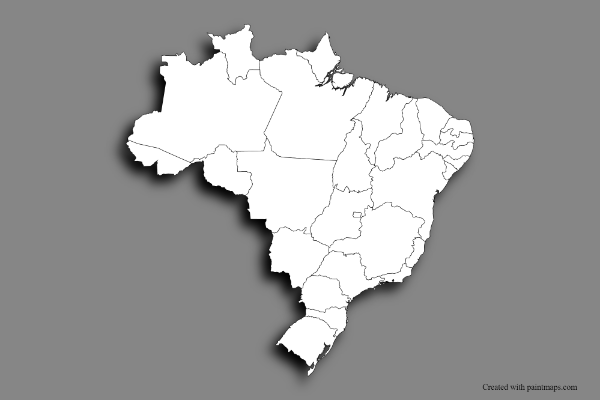 Brazil is the largest country in South America and the fifth largest country in the world, both in terms of land area and population. The country is renowned for its biodiversity, culture, and scenic beauty. Brazil also has a well-developed education system with both public and private institutions. The government invests heavily in education, with around 6% of the national GDP dedicated to education. However, the quality of education can vary widely between institutions, with some being highly regarded and others less so. Brazilian universities are known for their research capabilities, and many institutions have active partnerships with international universities and research organizations. Additionally, Brazil is home to a large number of international students, with more than 50,000 studying in the country in recent years.
Top 10 Universities of Brazil - 2026
Following is a list of the 10 top universities in Brazil ranked during 2026. Click on a university to find its detailed information.
| Rank | Name | City |
|---|---|---|
| #1 | University of São Paulo | São Paulo |
| #2 | State University of Campinas | Campinas |
| #3 | Federal University of Rio de Janeiro | Rio de Janeiro |
| #4 | São Paulo State University | São Paulo |
| #5 | Pontifical Catholic University of Rio de Janeiro | Rio de Janeiro |
| #6 | Federal University of Minas Gerais | Belo Horizonte |
| #7 | Federal University of Rio Grande do Sul | Porto Alegre |
| #8 | Federal University of Santa Catarina | Florianopolis |
| #9 | University of Brasília | Brasilia |
| #10 | Federal University of São Paulo | São Paulo |
List of Universities in Brazil
Following is a list of 181 universities in Brazil. Click on a university to find its detailed information.
Featured Articles
Following is a list of 8 informative articles with valuable insights into universities and higher education in Brazil.
International student trends in 2026 reveal shifting preferences toward career-focused education, flexible visa policies, and better post-study opportunities. While countries like the United States and United Kingdom remain top choices, leading institutions such as Harvard University and University of Oxford continue to attract students worldwide. [Read More]
QS Ranking is a global system that compares universities by reputation, citations, faculty–student ratio, employability, internationalization, and sustainability. Use it to shortlist schools and subjects, track trends, and benchmark options—but pair rankings with course fit, costs, support, and real student feedback. [Read More]
Online university learning offers flexibility, accessibility, and cost savings but requires strong time management and self-motivation. Compared to onsite education, it lacks in-person interaction and networking opportunities. Students can succeed by establishing routines, staying organized, and engaging actively in virtual classrooms. [Read More]
Unraveling the methodology behind QS rankings reveals a multifaceted approach, balancing academic reputation, research impact, employability, and global diversity. While criticisms persist, QS continually evolves its methodology to capture the evolving landscape of higher education, guiding stakeholders with nuanced insights beyond mere numerical standings. [Read More]
In higher education, achieving true equity, inclusion, and social justice poses challenges. Implicit bias, underrepresentation, and campus climate hinder progress. Embracing diversity is key to fostering an inclusive academic landscape. [Read More]
Discover the oldest universities in the world, from the historic Al-Azhar University in Cairo to the prestigious University of Coimbra in Portugal. Explore their rich legacies, renowned alumni, and enduring contributions to education and scholarship. [Read More]
Discover the top 10 universities that have produced the most Nobel Prize winners. From Harvard to Oxford, these institutions have made groundbreaking discoveries in fields like physics, chemistry, and medicine, revolutionizing the way we live our lives. Learn about their notable contributions to society and the impact they have made on the world. [Read More]
Universities around the world celebrate Earth Day by organizing a range of events and initiatives that promote sustainability and environmental awareness. From campus clean-ups to sustainability fairs and speaker series featuring environmental experts, universities demonstrate their commitment to protecting our planet and creating a sustainable future. Discover how universities celebrate Earth Day and their role in promoting environmental awareness. [Read More]
Missing a University?
Know a university or college in Brazil that isn't listed here? Tell us about it and our editors will review it.