
Universities in Guatemala
Guatemala is a country located in Central America, bordered by Mexico to the north and west, Belize to the northeast, Honduras, and El Salvador to the southeast, and the Pacific Ocean to the south. With a population of around 18 million people, Guatemala is the most populous country in Central America. The higher education system in Guatemala is relatively small, with a few universities and colleges offering a range of undergraduate and graduate degree programs in fields such as engineering, social sciences, humanities, and more. According to the UNESCO Institute for Statistics, the gross enrollment ratio for tertiary education in Guatemala was approximately 22.4% in 2019, indicating that access to higher education is limited. While there are no official statistics on the number of international students studying in Guatemala, the country does offer some opportunities for international students to study Spanish or participate in exchange programs. Overall, while the higher education system in Guatemala is relatively small, the government has made efforts to improve access to higher education, including initiatives to provide scholarships and other forms of financial aid to low-income students.
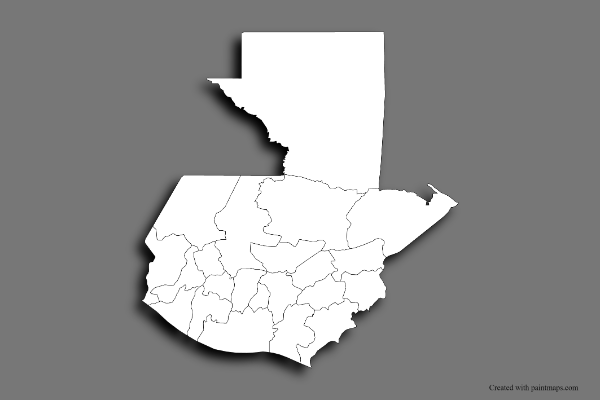 Guatemala is a country located in Central America, bordered by Mexico to the north and west, Belize to the northeast, Honduras, and El Salvador to the southeast, and the Pacific Ocean to the south. With a population of around 18 million people, Guatemala is the most populous country in Central America. The higher education system in Guatemala is relatively small, with a few universities and colleges offering a range of undergraduate and graduate degree programs in fields such as engineering, social sciences, humanities, and more. According to the UNESCO Institute for Statistics, the gross enrollment ratio for tertiary education in Guatemala was approximately 22.4% in 2019, indicating that access to higher education is limited. While there are no official statistics on the number of international students studying in Guatemala, the country does offer some opportunities for international students to study Spanish or participate in exchange programs. Overall, while the higher education system in Guatemala is relatively small, the government has made efforts to improve access to higher education, including initiatives to provide scholarships and other forms of financial aid to low-income students.
List of Universities in Guatemala
Following is a list of 17 universities in Guatemala. Click on a university to find its detailed information.
| Name | City |
|---|---|
| Central National School of Agriculture | Villa Nueva |
| Da Vinci University of Guatemala | Huehuetenango |
| Francisco Marroquín University | Ciudad de Guatemala |
| Galileo University | Ciudad de Guatemala |
| InterNaciones University | Ciudad de Guatemala |
| Istmo University | Ciudad de Guatemala |
| Mariano Galvez University of Guatemala | Ciudad de Guatemala |
| Maya Kaqchikel University | Alameda Chimaltenango |
| Mesoamerican University | Ciudad de Guatemala |
| Panamerican University | Ciudad de Guatemala |
| Rafael Landívar University | Ciudad de Guatemala |
| Regional University of Guatemala | Guatemala City |
| Rural University | Ciudad de Guatemala |
| San Pablo University of Guatemala | Ciudad de Guatemala |
| University of San Carlos of Guatemala | Ciudad de Guatemala |
| University of the Valley of Guatemala | Ciudad de Guatemala |
| University of the west | Quetzaltenango |
Search Universities by Course
Explore universities by degree and course in Guatemala. Use our intuitive form to search for universities in Guatemala that offer your desired degree level and course. Simply type in a course name below and select the appropriate course from the dropdown list of matching courses. Whether you're seeking a bachelor's, master's, or doctoral program, we simplify your university search.
Featured Articles
Following is a list of 8 informative articles with valuable insights into universities and higher education in Guatemala.
International student trends in 2026 reveal shifting preferences toward career-focused education, flexible visa policies, and better post-study opportunities. While countries like the United States and United Kingdom remain top choices, leading institutions such as Harvard University and University of Oxford continue to attract students worldwide. [Read More]
QS Ranking is a global system that compares universities by reputation, citations, faculty–student ratio, employability, internationalization, and sustainability. Use it to shortlist schools and subjects, track trends, and benchmark options—but pair rankings with course fit, costs, support, and real student feedback. [Read More]
Online university learning offers flexibility, accessibility, and cost savings but requires strong time management and self-motivation. Compared to onsite education, it lacks in-person interaction and networking opportunities. Students can succeed by establishing routines, staying organized, and engaging actively in virtual classrooms. [Read More]
Unraveling the methodology behind QS rankings reveals a multifaceted approach, balancing academic reputation, research impact, employability, and global diversity. While criticisms persist, QS continually evolves its methodology to capture the evolving landscape of higher education, guiding stakeholders with nuanced insights beyond mere numerical standings. [Read More]
In higher education, achieving true equity, inclusion, and social justice poses challenges. Implicit bias, underrepresentation, and campus climate hinder progress. Embracing diversity is key to fostering an inclusive academic landscape. [Read More]
Discover the oldest universities in the world, from the historic Al-Azhar University in Cairo to the prestigious University of Coimbra in Portugal. Explore their rich legacies, renowned alumni, and enduring contributions to education and scholarship. [Read More]
Discover the top 10 universities that have produced the most Nobel Prize winners. From Harvard to Oxford, these institutions have made groundbreaking discoveries in fields like physics, chemistry, and medicine, revolutionizing the way we live our lives. Learn about their notable contributions to society and the impact they have made on the world. [Read More]
Universities around the world celebrate Earth Day by organizing a range of events and initiatives that promote sustainability and environmental awareness. From campus clean-ups to sustainability fairs and speaker series featuring environmental experts, universities demonstrate their commitment to protecting our planet and creating a sustainable future. Discover how universities celebrate Earth Day and their role in promoting environmental awareness. [Read More]